AI/ML Engineer · Researcher · Toledo, Ohio
Making machine learning work on signals that don’t behave
I build ML systems for physical processes — furnaces, hip scans, roads, microscopes — where the measurement is as hard as the model. I’m an ML engineer at the Northwest Ohio Innovation Consortium, partway through a master’s in computer science engineering at the University of Toledo.
Highlights
- Granted Indian patent IN 573184 Flower Plucking Robotic Arm · granted Oct 2025
- Pending Patent application Osteoporosis risk model · filed via UToledo Technology Transfer, 2026
- 2 Published papers Springer Nature · IEEE · plus 1 under review
- $50K NSF I-Corps grant Osteoporosis risk tool · 2026
- Press Featured in UToledo News Sept 2026
About
I work on the machine learning that has to survive contact with hardware.
I build machine learning systems for physical processes — furnaces, hip scans, roads, microscopes — where the measurement is as hard as the model. The through-line is hybrid fuzzy–deep learning: a fuzzy layer for the ambiguity, a deep model for the structure underneath it.
Glass furnace · Northwest Ohio Innovation Consortium · 4.37°F
The sensor fails. The reading continues.
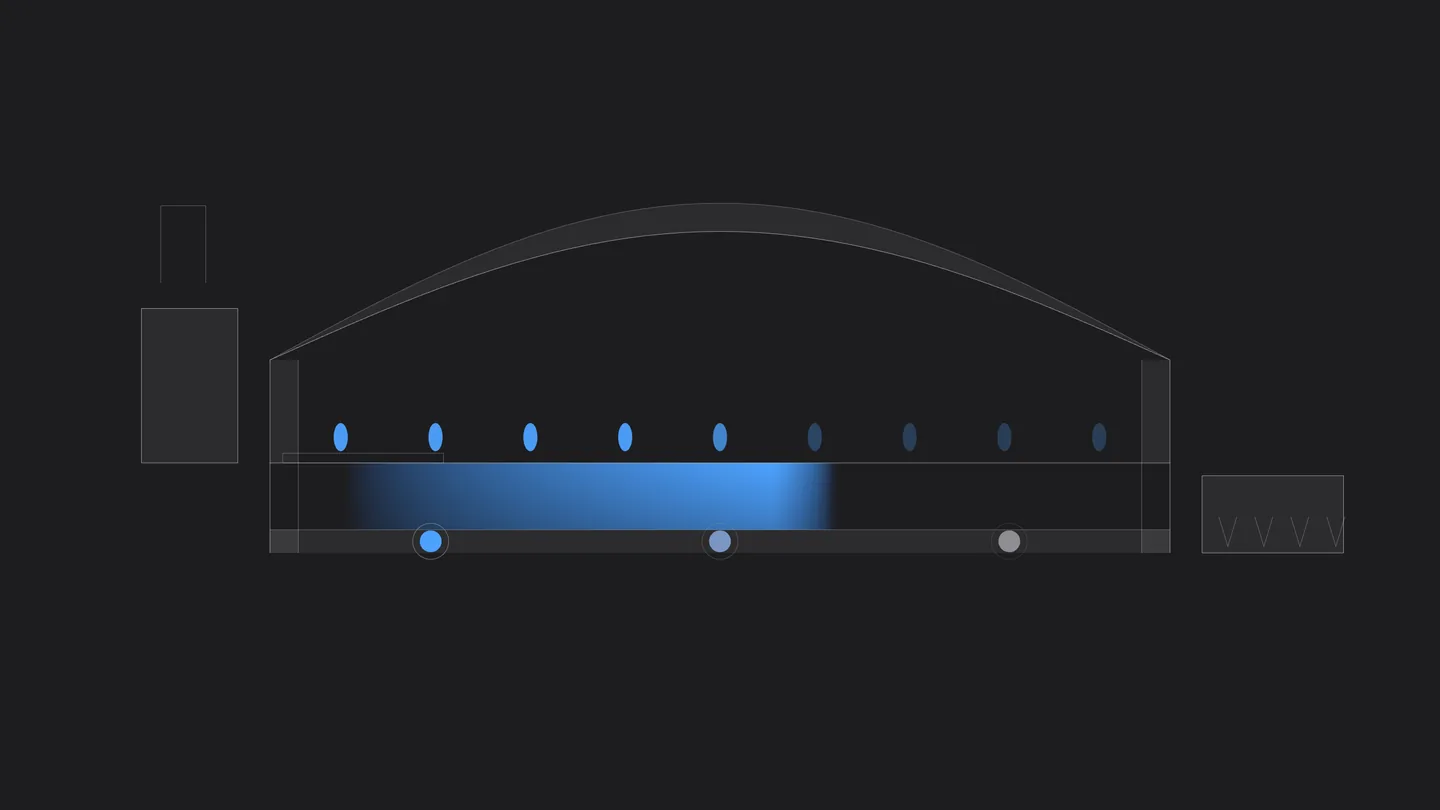
4.37°F on a 2,150°F process
RMSE mid-melt at 100 TPD — about 0.2%.
Six models, two production regimes
Rate splits the furnace into two physical systems.
Predict the change, not the value
Absolute temperature only learned the mean.
Osteoporosis · MS thesis research, University of Toledo · 88%
Risk, from a scan you already had.
I isolate bone from a routine CT, extract 18 density features and combine them with age, BMI and lab markers — high, medium or low risk in minutes, at approximately 88% accuracy.
It reads imaging patients have already had, instead of the separate DEXA appointment screening normally depends on.
Approximately 88% is the university’s figure, reported in UToledo News, 8 September 2026.
Brain tumor · University of Toledo, Dept. of EECS · 95.8%
Where the boundary is not a boundary.
Tumour margins are soft and blurred, which is exactly where hard clustering fails. Fuzzy C-Means segments the ambiguous boundary and a CNN classifies what it finds.
Cell death · University of Toledo
Reading cell death without a stain.
Studying how cancer cells die normally requires fluorescent labelling, which is invasive and can alter the biology being observed. This asks whether death patterns can be recognised from raw, unlabelled microscopy video alone.
Traffic forecasting · Ohio Department of Transportation · 8.92%
Seven years of counts is not a time series.
With only seven years of counts, time-series forecasting is the wrong frame. Normalising the origin-destination matrix by population turns the task into learning a spatial assignment operator that can be re-expanded against any year.
Speed estimation · Independent work, then Ohio Department of Transportation
Speed, from a camera that only sees boxes.
Built first independently — roadside video capture, detection, tracking and speed derived from tracked movement, with real-time inference on a Raspberry Pi at the roadside. Then integrated into ODOT’s existing statewide detection network.
Life
The work, and the days around it.
Photographs from the lab, the conference hall and the years in between. Each one opens with the whole story beside it.
-
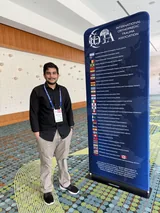
Conference · September 2026
OTA 2026, from the exhibit hall
Walking the exhibit hall showed me how much goes into treating fractures and how little into catching bone weakness before one — the gap Osteo AI, the tool I am building for my master’s thesis, is meant for. Talking with surgeons, researchers and industry showed me where it could fit in a clinic and what it would have to prove.
-
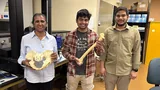
Press · September 2026 · Photo: UToledo News
The osteoporosis work, written up
UToledo News featured the osteoporosis risk model I work on: it reads CT scans patients already have, with no separate DEXA scan and no weeks of waiting, and returns a risk assessment in minutes.
-
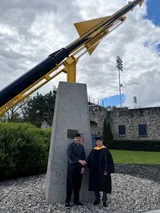
Graduation · May 2026
Graduation, and on to the master’s
I finished my bachelor’s in computer science engineering at the University of Toledo and went straight on to the master’s in the College of Engineering, under the same supervision.


Tech stack
The tools I reach for
Fuzzy–deep learning at the centre; the rest is what it takes to get a model in front of someone who can act on it.
learning
- Python
- TensorFlow
- Keras
- Scikit-Learn
- OpenCV
- FastAPI
- React
- pandas
- NumPy
- Git
- Vite
- Matplotlib
- Raspberry Pi
- MATLAB
- JavaScript
Contact
Get in touch
I’m looking for full-time ML engineering and research roles from Summer 2027, and for internships before then. The fastest way to reach me is email.